Source Wire Uncoiler for Automotive, Electronics, and Home Appliance Lines
Compare 30 wire uncoiler options from China, featuring hydraulic and automatic models with PLC control. These machines support coil uncoiling for automotive parts, electronics, and home appliance manufacturing, with customizable widths and speeds to fit your production needs; compare the available evidence and request quotations based on your requirements.
Key considerations
Products List


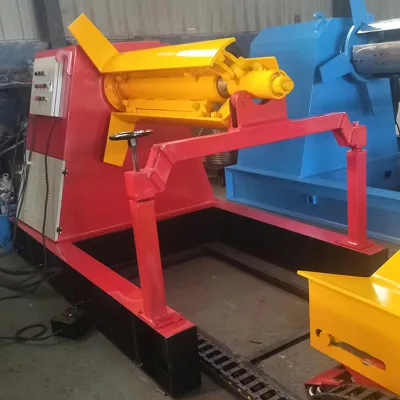


Heavy Duty Hydraulic Uncoiler for Slitting Line
$239900.00 - $240000.00
Moq: 1
Botou Boheng Metallurgical Equipment Manufacturing Co., Ltd.


Comprehensive Sourcing Guide
Wire Uncoiler Sourcing Guide
The wire uncoiler serves as a critical entry point in automated production lines, specifically designed to support and uncoil metal strips or wire coils for downstream processing. Based on observed market data, these units are frequently integrated into comprehensive automatic production lines for industries such as automotive parts, electronics, and home appliances. The core function involves managing large deformation processes, often utilizing hydraulic expansion types to ensure the coil remains stable during high-speed feeding operations.
Buyers must distinguish between simple decoilers and fully integrated systems that include stamp presses, roll forming machines, and shear machines. The observed product range includes models with flexible transmission types and intelligent manufacturing capabilities, catering to flow production line requirements. When selecting a unit, verify whether the machine is configured for sheet usage or specific drum making applications, as the feeding material width and thickness capabilities vary significantly between standard and customized configurations.
Product Scope and Observed Listing Signals
Market listings for wire uncoilers reveal a wide spectrum of capabilities, ranging from basic single-package units to complex, automated lines with speeds up to 35 meters per minute. Observed specifications indicate that feeding widths can reach 1300mm, while thickness tolerances typically span from 0.12mm to 3mm. These signals suggest that suppliers offer both standard models, such as the TEC-KEY uncoiler, and highly customized solutions tailored to specific customer needs regarding machine color and overall dimensions.
Procurement teams should note that product origins are predominantly from China, with specific manufacturing hubs like Yingkou appearing in supplier data. The observed price range is exceptionally broad, extending from approximately $530 to over $1,000,000, reflecting the difference between standalone decoilers and full production line setups. Buyers must carefully evaluate the listed condition, which is consistently marked as new, and verify if the "customized" attribute applies to the entire system or merely specific components like the control interface.
Technical Specifications to Verify
Technical due diligence requires a precise match between the machine's power rating and the production line's demands. Observed data highlights main motor powers ranging from 1.5kW to 3kW, with voltage requirements typically set at 380V, though some units support 110V or 220V. It is essential to confirm the control system architecture, as advanced models utilize a PLC combined with a touch screen for intelligent manufacturing, whereas simpler units may rely on manual or basic automated controls.
Dimensional and capacity constraints are equally critical for facility planning. The physical footprint of these machines can vary, with standard sizes observed around 2800mm by 1550mm by 1470mm, though some specifications list slightly different dimensions. Buyers must verify the automatic grade, ensuring the unit is truly automatic rather than semi-automatic, and check the speed capabilities, which range from 5 to 10 pieces per minute for specific drum making applications to 8-35 meters per minute for continuous sheet processing.
Compliance and Safety Documentation
Safety and regulatory compliance are non-negotiable when importing industrial machinery from international markets. The observed product listings frequently cite ISO and CE certifications, with some entries specifically mentioning ISOCCC standards. These certifications indicate that the manufacturer has undergone specific quality and safety assessments, but buyers must request the actual certification documents to verify their validity and ensure they cover the specific model being purchased.
Beyond general certifications, detailed machinery test reports are often provided by suppliers to validate performance claims. These reports should be scrutinized to confirm that the machine meets the required safety standards for the intended industry, such as automotive or home appliance manufacturing. Additionally, warranty terms vary significantly, with observed periods ranging from 12 months to 3 years, necessitating a clear understanding of what specific components are covered under the warranty agreement.
Cost Drivers and Commercial Terms
The total cost of ownership for a wire uncoiler is driven by the level of automation and the complexity of the customization required. While basic decoilers with simple plastic film packing may be available at lower price points, comprehensive production lines with wood case packing and intelligent manufacturing features command significantly higher prices. The observed minimum order quantity is consistently one unit, allowing for flexible procurement strategies, but the final price is heavily influenced by the specific voltage, motor power, and control system selected.
Commercial terms regarding packaging and shipping must be explicitly defined to avoid unexpected logistics costs. Suppliers offer packing options ranging from simple plastic film to robust wood cases, depending on the customer's requirements and the fragility of the equipment. Buyers should also clarify the lead time and delivery terms, as the origin location in China can impact shipping duration. Understanding the full scope of the "as customer need" customization is vital, as it directly influences the final commercial invoice and production timeline.
Supplier Qualification and Quality Control
Supplier qualification extends beyond basic certification checks to include an assessment of their production capabilities and industry reputation. Some suppliers identify as members of the Asian Packaging Federation, which may indicate a higher standard of operational integrity and adherence to industry norms. However, buyers should independently verify these claims and assess the supplier's track record in delivering complex automatic production lines for sectors like electronics and automotive parts.
Quality control protocols must be established before production begins, focusing on the core components and the final assembly process. The motor is a critical core component, and its quality directly impacts the machine's longevity and performance. Buyers should request detailed information on the machinery test reports and ensure that the final product matches the agreed-upon specifications for speed, voltage, and dimensions. Regular quality audits during the manufacturing phase can help mitigate risks associated with the "customized" nature of many of these orders.
Long-Term Procurement Checks
Establishing a long-term procurement strategy requires a focus on after-sales support and the availability of spare parts. The warranty period, observed to range from one to three years, is a key indicator of the supplier's confidence in their product's durability. Buyers should negotiate clear terms for warranty extensions and ensure that the supplier provides a comprehensive maintenance plan that covers the PLC, touch screen, and hydraulic systems.
Future scalability is another critical factor when selecting a wire uncoiler for a growing production line. The observed "flexible production" and "intelligent manufacturing" attributes suggest that some units can be upgraded or integrated with additional machinery as production needs evolve. Buyers should verify the compatibility of the current unit with potential future expansions, such as adding more rollers or integrating with new stamping presses, to ensure the initial investment remains relevant over the long term.
FAQs
How fast can a wire uncoiler feed material during production?
Listed wire uncoiler machines typically run at speeds of 8 to 35 meters per minute, which suits continuous roll forming and stamping lines. Actual speed depends on coil condition, material thickness, and downstream equipment synchronization. When selecting a model, match the uncoiler speed range to your line's peak demand so the feed never becomes a bottleneck.
What material thickness and width can these uncoilers handle?
The machines handle material thickness from 0.12 to 3 millimeters, with feeding widths around 1250 to 1300 millimeters. This range covers thin wire strips and heavier sheet coils used in appliance, automotive, and electronics work. Always confirm the exact thickness and width combination for your coil stock before ordering, since capacity varies by model configuration and mandrel design.
What voltage options are available for wire uncoiler machines?
Listed models operate on 380V, with some units also supporting 110V and 220V supplies. Chinese-made units commonly default to 380V three-phase power, which is standard in industrial plants. Verify your facility voltage and phase requirements before purchase, and confirm whether the motor power, typically around 1.5 to 3 kilowatts, matches your workshop's electrical capacity.
Which control system does the wire uncoiler use?
These uncoilers use a PLC control system with a touch screen interface, allowing operators to set speed, monitor coil status, and adjust parameters directly. PLC control supports integration with downstream roll forming, shearing, or stamping equipment on automated lines. Ask the supplier for control documentation and confirm compatibility with your existing line's communication requirements before finalizing an order.
Can wire uncoilers be customized for specific production requirements?
Yes, customization is available, including machine color according to customer requirements and custom specifications. Suppliers can adapt feeding width, structure, and configuration to match your coil size and production line layout. Provide your material specifications, coil weight, and line drawings early in the inquiry so the manufacturer can confirm feasibility and quote an appropriate configuration.
What warranty and after-sales support do these machines include?
Warranty terms vary by listing: some machines carry a 12-month warranty while others offer 3 years. Machinery test reports can be provided, and certification listings include CE, ISO, and CCC. Before ordering, confirm in writing which warranty period applies to your specific model, what parts are covered, and how remote support or spare parts supply is handled.
How are wire uncoiler machines packed for shipping?
Packing options include wood case packaging for export shipments and simple plastic film wrapping for the main machine, with packing done according to customer requirements. Wooden cases give better protection for sea freight and long-distance transport. Confirm your preferred packing method at order time, especially for full production lines where multiple machines ship together.
Which industries commonly use these wire uncoiler machines?
These uncoilers serve automotive parts, electronics, and home appliance manufacturing, supporting production lines for drum making and sheet processing. They function as decoilers that support and uncoil coil stock upstream of stamping, roll forming, and shearing machines. If your application involves coil feeding for similar metalworking processes, request case details matching your material and thickness range.